
About 14 percent of men are at risk for prostate cancer. Approximately 5 to 10 percent of prostate cancers are hereditary. Other prostate cancers can have underlying environmental causes or can be caused by a combination of environment and genetics.
Family history is the most common risk factor for prostate cancer. Other risk factors – such as obesity, smoking, prostatitis, and vasectomy – have been suggested to increase the link for prostate cancer. However, a definite association has not been proven. The American Cancer Society estimates that in 2021 alone, more than 248,000 new prostate cancer cases will be diagnosed, making it the most common cancer in men. It also represents more than 13 percent of all cancer cases in the U.S.
Transurethral ultrasound ablation (TULSA) is a relatively new outpatient procedure that was approved by the U.S. Food and Drug Administration in 2019 for prostate tissue ablation after the TACT clinical trial. Ablation refers to the destruction of tissues, in this case with heat so there are no incisions, surgery, or radiation required.
The word “TULSA” stands for Transurethral Ultrasound Ablation. The TULSA Procedure is a minimally invasive procedure that uses directional ultrasound to produce very high temperatures to ablate targeted prostate tissue. The procedure is performed in a Magnetic Resonance Imaging (MRI) suite and uses the TULSA-PRO® system to ablate prostate tissue. The procedure combines real-time MRI with robotically-driven directional thermal ultrasound to deliver predictable, physician-prescribed ablation of whole-gland or partial prostate tissue.
Data from a 2020 study published in The Journal of Urology shows that TULSA can effectively destroy cancerous prostate tissue with reduced side effects and low toxicity.
Not all insurance companies cover TULSA. There is currently a limited number of TULSA-PRO centers in North America. Here is a list of centers. For more information visit TulsaProcedure.com
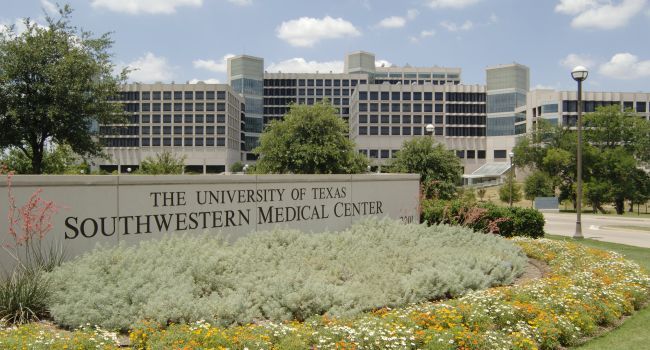
UT Southwestern Medical Center (Dallas, TX)
Rad Net’s Liberty Pacific West Hills Facility (West Hills, CA)
Busch Center (Alpharetta, GA)
Mayo Clinic Florida (Jacksonville, FL)
UCLA Medical Center (Santa Monica, CA)
Scionti Prostate Center (Sarasota, FL)
Stanford Medicine Cancer Center (Stanford, CA)
The Urology Place (San Antonio, TX)
WellSpan York Advanced Prostate Care Center (York, PA)
Yale Cancer Center (New Haven, CT)
Clinical Trial Centers:
Johns Hopkins MRI-Guided Treatment Center (Baltimore, MD)
UCLA Health (Santa Monica, CA)
I have prostate cancer and I would try anything even tho it seems like it’s not covered by insurance. Why are insurance companies waiting?
Very interesting article