
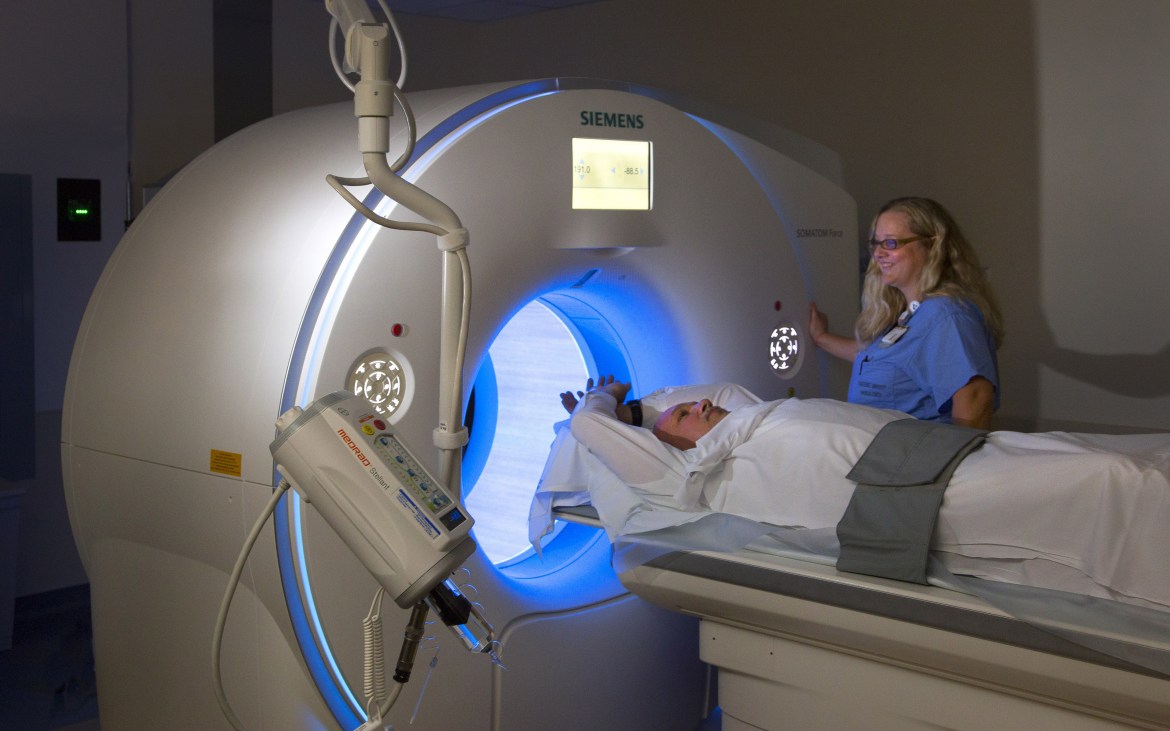
A lot of people worry about the risks of CT, technically known as a Computed tomography (CT), and sometimes called “computerized tomography” or “computed axial tomography” (CAT). CT is a noninvasive medical examination or procedure that uses specialized X-ray equipment to produce cross-sectional images of the body. Each cross-sectional image represents a “slice” of the person being imaged. These cross-sectional images are used for a variety of diagnostic and therapeutic purposes.
CT scans can be performed on every region of the body for a variety of reasons (e.g., diagnostic, treatment planning, interventional, or screening). Most CT scans are performed as outpatient procedures.
According to the U.S. Food and Drug Administration (FDA), the main risks are those associated with
- Test results that demonstrate a benign or incidental finding, leading to unneeded, possibly invasive, follow-up tests that may present additional risks and
- The increased possibility of cancer induction from x-ray radiation exposure.
The probability for absorbed x-rays to induce cancer or heritable mutations leading to genetically associated diseases in offspring is thought to be very small for radiation doses of the magnitude that are associated with CT procedures. Such estimates of cancer and genetically heritable risk from x-ray exposure have a broad range of statistical uncertainty, and there is some scientific controversy regarding the effects from very low doses and dose rates as discussed below. To date, there is no evidence of genetically heritable risk in humans from exposure to x-rays. Under some rare circumstances of prolonged, high-dose exposure, x-rays can cause other adverse health effects, such as skin erythema (reddening), skin tissue injury, and birth defects following in-utero exposure. But at the exposure levels associated with most medical imaging procedures, including most CT procedures, these other adverse effects do not occur.