
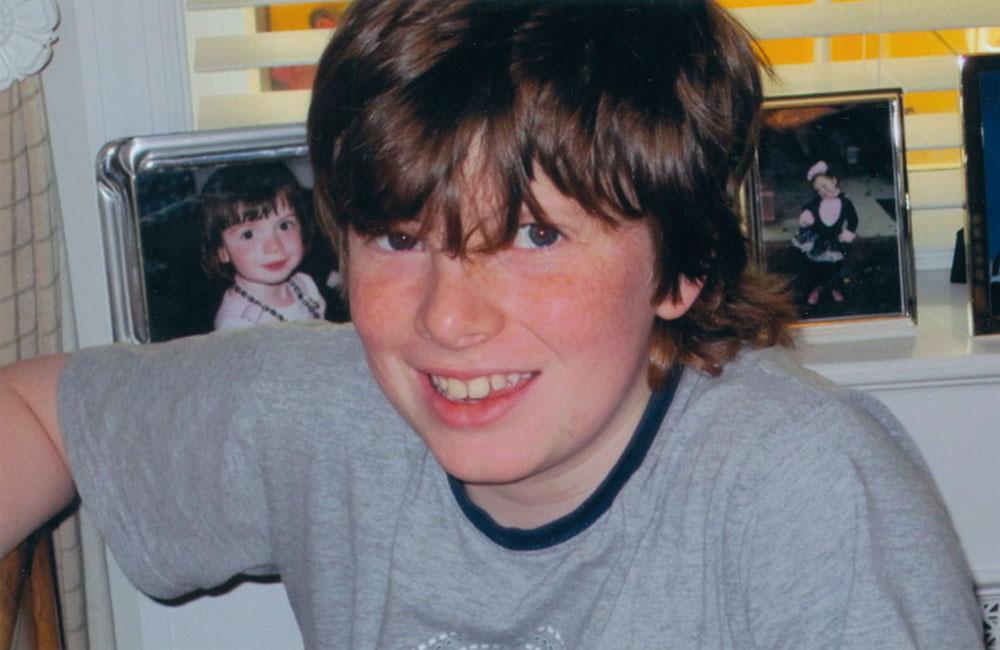
How can you describe the pain that parents feel when they lose a young child? And what if it were preventable? Rory Staunton’s death was preventable. Rory Staunton was a healthy, 12-year-old boy on March 28th, 2012 when he cut his arm in gym class after diving for a ball. The gym teacher applied two band-aids to the wound but did not send him to the nurse who was on duty. The wound was not cleaned. When you read what happened next, you will be in disbelief.
That evening, after midnight Rory woke up moaning with a pain in his leg. He fell back asleep and in the morning he had a fever of 104 degrees. The family called Rory’s pediatrician. They made an appointment for 6 p.m. She saw the scrape on the elbow and she took vital signs. She observed that he had mottled skin and noted the pain in his leg and stomach tenderness. Rory’s parents were concerned about these symptoms but the pediatrician said it was a stomach virus that was going around in the New York area where the family lived. The doctor told Rory’s parents to take him to the hospital for re-hydration and fluids. The doctor said Roy would have diarrhea the next day and the virus would run its course. She was not concerned.
Rory’s parents did take him to the emergency room. There the doctor told the family that Rory had a sick stomach and dehydration. They gave him two bags of intravenous fluids. Three vials of blood were drawn and he was given a prescription for an anti-nausea drug called Zofran. The pediatrician at the hospital who examined Rory wrote “pt improved” on his chart before the discharge. She said it was a stomach virus and that Rory could take up to a week to recover.
The parents took Rory home that Thursday night and he fell into a deep sleep but the following morning, on Friday, he continued to complain of pain. Rory’s parents repeatedly called his pediatrician and told her Rory wasn’t eating and that they couldn’t control his temperature with Tylenol or Motrin.
They brought Rory back to the hospital on Friday evening and this time the hospital admitted him to the ICU. He was gravely ill. Rory was fighting a serious infection. This infection had been in his blood when the parents brought him to his pediatrician and to the hospital on Thursday. Bacteria had entered his blood through the cut on his arm. Rory was in septic shock.
Originally when Rory was taken by his parents to his pediatrician and the emergency room on Thursday night he was in fact fighting for his life. Critical information gathered by his pediatrician and at the hospital that night had not been viewed as important. In fact, Rory’s vital signs had worsened before he left the emergency room on Thursday night. The blood values that the doctor ordered stat (immediate) were not viewed by the hospital doctor who ordered them. The laboratory in the hospital had flagged Rory’s blood as showing an abnormality within an hour of Rory’s arrival there, but there was no system in place and no one took the time to alert the emergency room with this information. When the critical value tests returned showing Rory was extremely ill, they had already left the hospital.
The hospital made no attempt to follow up with the family, to inform them that he was seriously ill. Their pediatrician did not follow up with the hospital on Friday when they called her with concerns that he was not improving.
Rory fought bravely to survive throughout Friday and Saturday but it was too late. On Sunday evening, Rory died.
According to Sepsisinstitute.org, Sepsis remains the leading cause of pediatric death worldwide, with reported mortality ranging from 4% to 50%. In the United States, over 75,000 children are hospitalized with sepsis annually, with nearly 10,000 deaths attributed to sepsis each year. Significant life-long morbidity can result for survivors of pediatric sepsis. Health care teams can directly impact sepsis-related morbidity and mortality through early identification and treatment.
To read more about Rory Staunton’s story, visit endsepsis.org. END SEPSIS, the Legacy of Rory Staunton, was founded in 2013 as the Rory Staunton Foundation for Sepsis Prevention. END SEPSIS is a movement of families and individuals across America and the globe who demand better infection education and hospital safety measures to ensure there are no more needless deaths from sepsis, a preventable and treatable disease.
The parents of Rory Staunton have done enormous work to help change laws and make the U.S. aware of Sepsis.
That is one of the saddest stories I’ve ever read.